The Architects of English Law
English law has been shaped by brilliant minds whose contributions echo through centuries. These legal luminaries not only mastered the intricacies of their craft but fundamentally transformed the principles of justice, equity, and human rights. Their legacy continues to influence legal systems across the Commonwealth and beyond.
Sir Edward Coke (1552-1634) - The Champion of Common Law
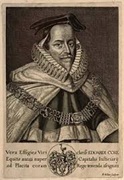
Sir Edward Coke stands as one of the most formidable legal minds in English history. As Lord Chief Justice, he boldly asserted that even the monarch was subject to the law—a revolutionary concept that laid the groundwork for constitutional governance. His seminal work, the "Institutes of the Lawes of England," became the definitive legal text for generations.
Coke's fearless opposition to royal prerogative and his defense of Parliament's authority made him a hero of constitutional law. His famous declaration that "the King hath no prerogative but that which the law of the land allows him" became a cornerstone principle that influenced not only English law but also inspired the framers of the American Constitution.
Sir William Blackstone (1723-1780) - The Great Codifier
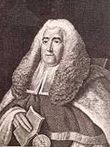
William Blackstone transformed legal education and understanding through his monumental "Commentaries on the Laws of England." Published between 1765 and 1769, this four-volume masterpiece made English law accessible beyond the legal profession for the first time. His clear, systematic approach to explaining common law principles revolutionized how law was taught and understood.
Blackstone's influence extended far beyond England's shores. His Commentaries became essential reading in the American colonies and profoundly influenced the development of American jurisprudence. Abraham Lincoln famously studied law primarily through Blackstone's works. His elegant prose and logical organization set the standard for legal writing that persists to this day.
Lord Mansfield (William Murray, 1st Earl of Mansfield) (1705-1793) - Modernizer of Commercial Law
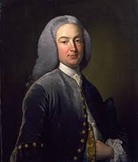
As Lord Chief Justice for an unprecedented 32 years, Lord Mansfield transformed English commercial law and made significant strides in human rights. He skillfully incorporated principles from international merchant law into English common law, making London the world's premier center for commercial litigation—a position it maintains today.
His most celebrated judgment came in Somerset v Stewart (1772), where he ruled that slavery had no basis in English common law, effectively freeing James Somerset. While carefully worded, this landmark decision dealt a significant blow to the institution of slavery and inspired abolitionist movements worldwide.
Sir Thomas More (1478-1535) - The Conscience of Law
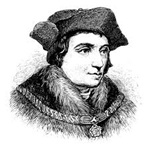
Before his tragic execution, Thomas More served as Lord High Chancellor and exemplified the intersection of law, ethics, and moral courage. A brilliant lawyer and humanist scholar, More rose through legal ranks to become one of Henry VIII's most trusted advisors. His "Utopia" explored ideal governance and justice, influencing political and legal philosophy for centuries.
More's ultimate refusal to compromise his principles, even when faced with death, established him as a symbol of judicial independence and moral integrity. His famous trial demonstrated both his legal brilliance and his unwavering commitment to conscience over convenience—a legacy that continues to inspire lawyers facing ethical dilemmas.
Lord Denning (Alfred Thompson Denning) (1899-1999) - The People's Judge
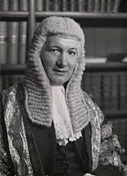
Known as the most influential English judge of the 20th century, Lord Denning was celebrated for his progressive approach to law and his clear, accessible judgments. Serving as Master of the Rolls from 1962 to 1982, he wasn't afraid to challenge precedent when he believed justice demanded it.
Denning championed the development of modern contract law, negligence principles, and civil liberties. His judgments were written in plain English, making legal reasoning understandable to ordinary citizens. His approach emphasized justice and fairness over rigid adherence to precedent, earning him both admirers and critics. His famous dictum, "Be you never so high, the law is above you," echoed Coke's principles centuries later.
Helena Normanton (1882-1957) - Pioneering Barrister
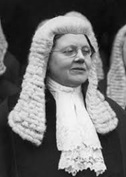
Helena Normanton broke through seemingly impenetrable barriers to become one of the first women called to the Bar in England in 1922. She fought tirelessly for women's rights to practice law, appearing in numerous high-profile cases and advocating for married women's property rights and gender equality in the legal profession.
As the first woman to lead the prosecution in a murder trial at the Old Bailey and one of the first women to practice in the High Court, Normanton opened doors for generations of female lawyers. Her academic contributions to international law and her unwavering determination in the face of institutionalized sexism make her a true pioneer of legal equality.
Sir Frederick Pollock (1845-1937) - The Scholar's Lawyer
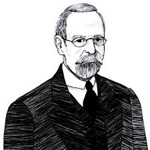
Frederick Pollock combined exceptional legal scholarship with practical jurisprudence. As a professor at Oxford and later at the University of London, he wrote extensively on contract law, torts, and jurisprudence. His collaboration with American jurist Oliver Wendell Holmes Jr. in their famous correspondence helped bridge English and American legal thought.
Pollock's textbooks, particularly on contracts and torts, remained authoritative for decades. His intellectual rigor and ability to synthesize complex legal principles into coherent frameworks influenced legal education throughout the Commonwealth and demonstrated that scholarly excellence and practical law could reinforce one another.
Lord Atkin (James Richard Atkin) (1867-1944) - Architect of Modern Negligence Law
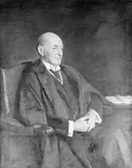
Lord Atkin's judgment in Donoghue v Stevenson (1932) revolutionized tort law by establishing the modern concept of negligence and the "neighbor principle." His famous question—"Who then, in law, is my neighbor?"—and his answer that we must take reasonable care to avoid acts or omissions that could reasonably foreseeably harm others, became fundamental to civil liability law worldwide.
During World War II, Atkin delivered a powerful dissent in Liversidge v Anderson, defending civil liberties against wartime executive overreach. Though initially the minority view, his dissent later became recognized as the correct approach to balancing security and liberty, and his words on the rule of law remain frequently cited in defending individual rights.
A Living Legacy
These remarkable individuals represent just a fraction of the brilliant legal minds who shaped English law. From Coke's assertion of law's supremacy over monarchs to Denning's accessible approach to justice, from Blackstone's systematic codification to Normanton's barrier-breaking courage, each contributed essential threads to the rich tapestry of English legal tradition.
Their collective legacy—a commitment to justice, the rule of law, individual rights, and accessible legal reasoning—continues to guide legal practice and inspire new generations of lawyers. As we face modern legal challenges, their principles remain as relevant as ever, reminding us that great lawyers don't merely apply the law; they shape it in service of justice and society.